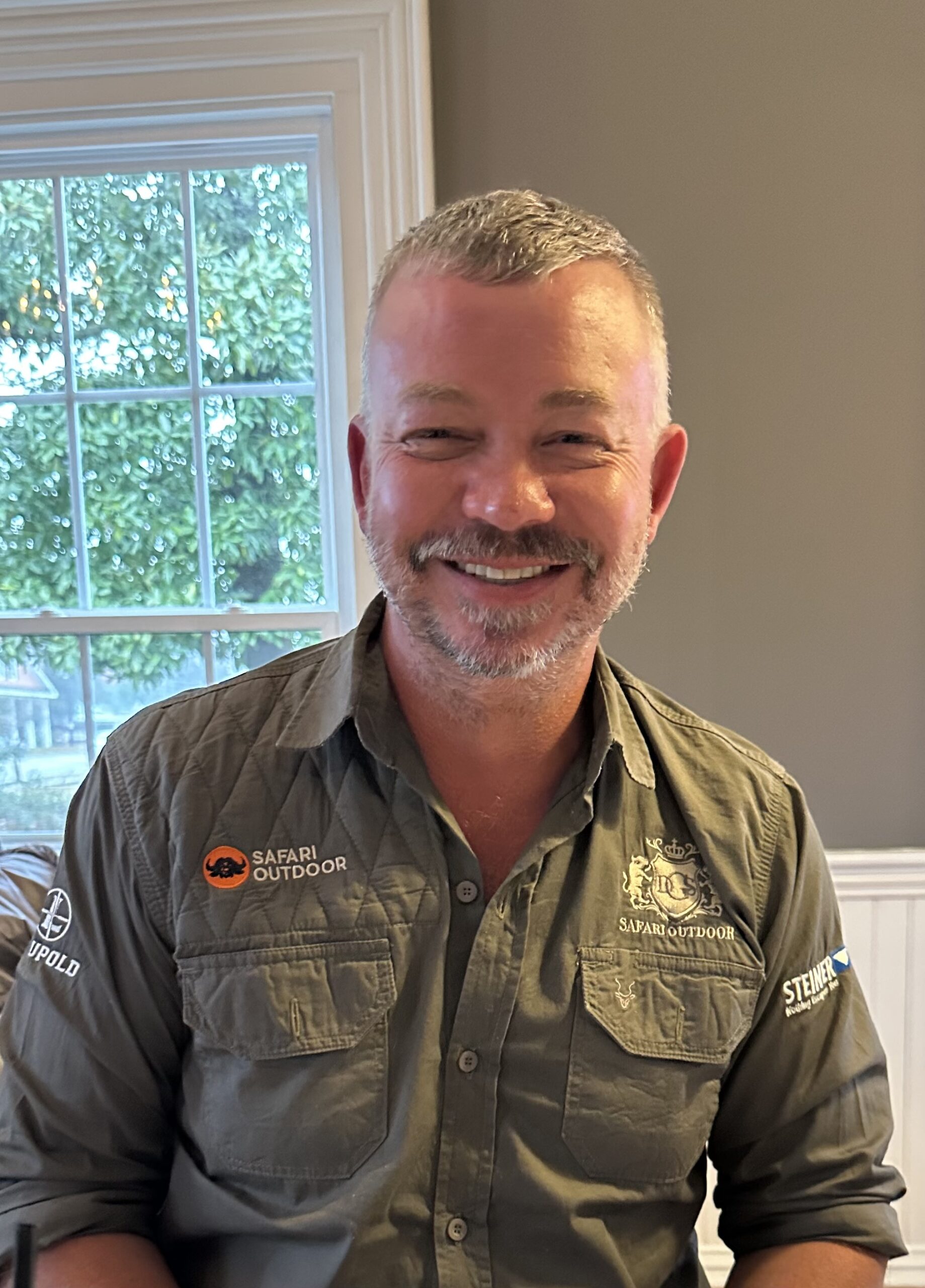
Henry has been in the safari industry since 2002. With my experience and passion for the industry My team and I will make an excellent effort that provide you with an enjoyable hunting experience.
Henry has a Diploma in Game Management and has been hunting professionally since 2002 and has more than 20 experience in plains game and dangerous game hunting.
He has his Outfitters and Professional Hunter permit in North-West as well as Limpopo province of South Africa.
Henry guides all the hunts himself and we use only the best and most qualified professional hunters for the larger groups that we guide on safaris every year. Even if you are guided by one of our qualified PH’s, Henry will still be directly involved with the management of your hunt. All the trackers and skinners are experienced in their work and will ensure that your trophies are well looked after until the taxidermist take over.
We do our best to ensure that all camps, equipment, and vehicles are kept in good condition to ensure that you always have a memorable time.
Whether you are hunting, doing a photographic Safari or an Overland tour with us, our primary goal is for you to have a good South African experience!
EXPERIENCES
South African experience of a lifetime!
Hunting
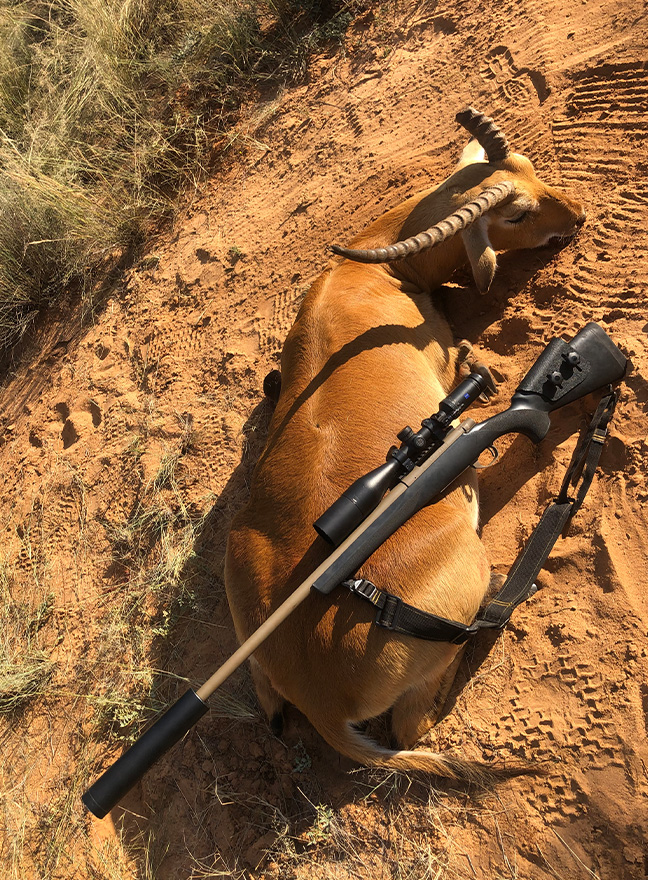
We cater for all types of hunting on all areas including bow hunting (both walk and stalk as well as hides), Rifle hunting, Black powder, and handgun.
Cull hunting is limited to May through to August each year, they change often and become available on short notice. Expect to hunt between 3 and 4 animals per day.
Henry Griffiths Safaris offers custom photographic safaris in Southern Africa, catering to various interests and budgets, ensuring a memorable and enjoyable experience for all.
Hunters have a responsibility to maintain the ecological balance.
Every day, local hunting outfitters and organizations receive a number of hostile e-mails and phone calls decrying their contribution to the deterioration of endangered animal species, begging them to rather focus on animal conservation, or bombarding them with threats.
Without hunting there would be no incentive for investing in game, and without hunting many species in South Africa would already be extinct or on the verge of extinction. One example is the White rhino. Despite the relentless poaching epidemic, South Africa is still home to almost 90% of the world’s rhino population.
Additionally, thanks to hunting, our sable, bontebok, wild ostrich, Cape Mountain zebra, Cape quagga, black wildebeest and many other species have been brought back from the brink of extinction and have successfully been reintroduced into areas where they had become locally extinct.
Hunting is a component of modern wildlife management, and it is often used to maintain a healthy population of animals where reserves are too small to allow natural regulation of populations or where hunting is a key part of the financial objective of the area.
Every year, a game count and the pasture-carrying capacity must be calculated accurately. Hunting and game capture are used to keep an ecological balance. Game counts and veld condition assessments are done annually to determine the carrying capacity of the hunting areas.
We look at what stocking rates it can handle per species, and then determine what animals, from what age classes and sex must be taken off by hunting.
Hunters are part of the ecosystem. They replace predators. In principle, utilization through conservation is an approved International Union for Conservation of Nature (IUCN) concept. The running costs of a hunting concession include labor, diesel, feed, road maintenance and fencing. Without the income from hunting, it will not be economically benefitting the landowner to continue conserving this area and it will most probably be converted to agricultural land or in some place’s settlements.
Value chain should also be considered. A host of employees benefit from the hunting operation, trackers, skinners, cleaners, cooks etc. All parts of the animal are used. Trophies get exported, the meat and skins are used by the locals and even bones are used in making knives and other curios.
Hunting needs to be done legally and ethically. The hunting register is filled in after the hunt and includes information on the species hunted and area. The register, with accompanying documentation including details of the concession, the outfitter number, a copy of the hunter’s passport and the professional hunter’s licenses, is used to apply for an export permit.
There is total traceability and transparency to keep the process lawful. In cases where threatened or protected species (TOPS), such as Tsessebe and Roan, are hunted, special permits are applied for to hunt and export the trophy.